Cultivating a Sustainable Future: Lessons from West Africa's Resilient Past
In a world grappling with the consequences of unsustainable practices, the story of Abena, a young woman in West Africa, offers a glimpse into a future where resilience and traditional knowledge pave the way for a more sustainable tomorrow. Inspired by the Afrofuturism movement, this narrative, crafted by archaeologists Amanda Logan and Katherine Grillo, challenges us to rethink our relationship with the environment and the legacies we leave behind.
Unlocking the Secrets of a Sustainable Past
Thriving in the Face of Adversity
In the year 2065, Abena's daily routine reflects the resilience of her grandparents, who weathered the storms of the past. As she rides her bike to work, where she advocates for the cultivation of insects as renewable protein sources, Abena reflects on the stories passed down from her elders. Long before, they had to survive swarms of locusts, harsh winds, and failing crops, a consequence of the environmental damage caused by the pursuit of disposable technologies. Rather than fleeing the desperate conditions, Abena's grandparents remained on their homelands, drawing upon the knowledge and traditions of their ancestors. They thrived on a diet of locust meat, bush leaves, and underground tubers, demonstrating the adaptability and resourcefulness that have been the hallmarks of their community for generations.Uncovering a Sustainable Past
The world inhabited by Abena and her grandparents is the product of the innovative work of archaeologists Amanda Logan and Katherine Grillo. By resurrecting the sustainable lifestyles of the past, as documented through archaeological research and African Oral Histories, these scholars have crafted a vision of the future that challenges the dominant narratives of progress and development.Tracing the Roots of Scarcity
The researchers' work in West Africa, particularly in the region of Ghana, has revealed a surprising truth. Data from the archaeological site of Banda show that past communities in the area thrived for centuries without experiencing famine, even during one of the worst droughts in the region's history. Yet, today, Ghana grapples with a nearly 25 percent poverty rate and over 21,000 people facing food insecurity. Logan and her collaborators trace this current scarcity to the legacy of European colonialism, especially during the 1800s, which disrupted the sustainable practices that had sustained these communities for generations.Sowing the Seeds of a Sustainable Future
Inspired by the resilience and adaptability of the past, Logan and Grillo are using their research to envision and cultivate sustainable futures. By drawing on the knowledge and practices of precolonial communities, they are creating worlds inhabited by characters like Abena and Akaina, young women who embody the potential for a more harmonious relationship between humanity and the natural world.Banda: A Sanctuary of Sustainability
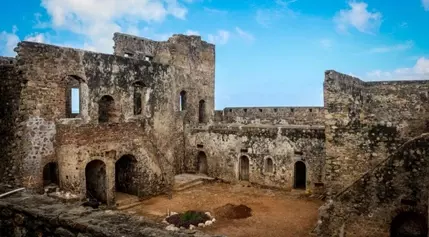
Much of this research has taken place at the archaeological site of Banda, located in western Ghana, near the border with Côte d'Ivoire. Six hundred years ago, this region was a tapestry of diverse landscapes, with balmy woodlands, savanna, and arable farmland. Farmers in this thriving community planted grains to make traditional dishes like starchy, mild fufu and thick, warm tuo zaafi, and they stored surplus tubers in their wattle-and-daub homes to nourish themselves throughout the year.Rewriting the Narrative of Progress
The work of Logan, Grillo, and their collaborators challenges the dominant narrative of progress, which often prioritizes technological advancement and economic growth over environmental sustainability and cultural preservation. By resurrecting the stories of the past and weaving them into visions of the future, they invite us to reconsider our relationship with the natural world and the legacies we leave behind. In doing so, they offer a powerful counternarrative, one that celebrates the resilience and adaptability of traditional communities and points the way towards a more sustainable and equitable future for all.






































![FAO Food Price Index firm in June: higher vegetable oil, sugar and dairy prices offset lower cereal quotations [EN/AR/RU/ZH]](https://img.royaweb.io/news/1809a51f5f01952398c755bdb8b84e62.webp "FAO Food Price Index firm in June: higher vegetable oil, sugar and dairy prices offset lower cereal quotations [EN/AR/RU/ZH]")